How to Winterize Your Gutters & Roofline (Avoid Ice Dams This Winter)
Feb 20, 2026

When melting snow refreezes along the roof edge, it creates pressure most homeowners never see coming. What starts as harmless snow can quickly turn into winter ice dams, forcing water under shingles and into walls. In Ontario, where freezing temperatures fluctuate all season, ice dam formation is one of the leading causes of cold-weather roof leaks.
Learning how to winterize your gutters & roofline (avoid ice dams) is not just seasonal upkeep. It is structural protection. The combination of snow accumulation, heat loss, and poor drainage leads to expensive damage that could have been prevented with the right preparation before snow arrives.
Winter preparation protects your roof deck, attic insulation, and exterior walls from water intrusion. When done properly, it reduces energy waste, prevents interior water damage, and extends the lifespan of asphalt shingles.
Why Winterizing Your Gutters & Roofline Is Critical in Ontario
Ontario’s dramatic freeze–thaw cycles create ideal conditions for ice dams. When outside temperatures drop below freezing at night and rise during the day, warm air escaping through the attic causes uneven melting snow. That meltwater refreezes along the colder roof edge, forming ice buildup that traps water behind it.
Research shows homes with inadequate attic insulation and poor roof ventilation can lose up to 25% of heating energy through the roof deck. This heat loss accelerates melting and refreezing. Trapped water backs up beneath asphalt shingles, leading to roof leaks and interior water damage. In Ontario, winter-related water damage claims often range between $5,000 and $30,000 depending on severity.
Snow accumulation during heavy snowfall can exceed 20–30 pounds per square foot, stressing gutters, fascia, and soffits. When gutters and downspouts are blocked by accumulated debris like pine needles and organic matter, proper drainage fails. Water pools at weak points, increasing the risk of foundation damage and costly repairs. Proactive winterizing before peak weather conditions arrive is one of the most effective ways to limit long-term damage.
What Causes Ice Dams to Form?
Ice dams develop when uneven roof temperatures allow snow to melt and refreeze along the roof edge. During winter weather, warm air from the heating system rises into the attic while cold air keeps eaves frozen. When temperatures rise and then temperatures drop again, water freezes repeatedly. Without proper ventilation, adequate insulation, and proper drainage through gutters and downspouts, ice buildup intensifies, leading to costly damage.
Heat Loss from Your Attic
Warm air escaping through attic hatches reduces energy efficiency and heats the roof deck. Snow melts unevenly, then water freezes near colder edges. Adding insulation creates an extra layer of protection and helps prevent ice dams before costly repairs begin.
Poor Roof Ventilation
Without proper ventilation, trapped heat builds under the roof while outside temperatures remain freezing. That imbalance encourages melting snow at higher points and refreezing at the eaves. Balanced airflow supports energy efficiency and reduces winter ice dams across most roofs.
Clogged or Improperly Sloped Gutters
Accumulated debris such as pine needles and organic matter block water flows through gutters and downspouts. When heavy snowfall melts, direct water cannot exit at ground level. Water freezes in blocked channels, stressing weak points and increasing foundation damage risks.
Freeze–Thaw Cycles in Canadian Winters
When temperatures rise during the day and temperatures drop overnight, repeated freeze cycles intensify ice buildup. Heavy snow melts briefly, then refreezes along the roof edge. These cycles strain shingles, snow guards, and drainage systems under extreme winter weather.
10 Warning Signs Your Gutters & Roofline Aren’t Ready for Winter
Identifying small fixes early helps prevent damage before heavy snowfall arrives. Many homeowners overlook subtle indicators until costly repairs become unavoidable. Routine maintenance, clean gutters, and keeping gutters functional can significantly reduce winter stress on the roof and foundation. Watch for these warning signs before snow arrives.
- Large icicles forming along eaves
Long icicles signal trapped meltwater and poor drainage along the roof edge. - Water stains on ceilings
Interior water marks suggest melting snow is penetrating weak points in the roof. - Sagging gutters
Heavy snow and accumulated debris add weight, stressing brackets and fascia. - Peeling fascia paint
Persistent moisture and water freezes cycles cause peeling paint and surface damage. - Ice buildup at roof edge
Thick ridges of ice indicate poor ventilation and trapped runoff. - Uneven snow melt
Patchy melting patterns reveal attic heat escaping unevenly. - Drafty attic
Cold air entering crawl spaces and attic areas suggests insulation gaps. - Mold or moisture smell
Persistent damp odor signals hidden water intrusion behind exterior walls. - Shingle damage
Lifted or cracked shingles allow direct water infiltration during thaw cycles. - Overflowing downspouts
Downspouts clear water slowly when blocked, increasing foundation cracks risk.
Recognizing these issues early gives homeowners extra protection against foundation damage and interior leaks. Using right safety gear, such as a roof rake or garden hose for inspection from ground level, helps remove snow safely, but addressing root causes remains essential to prevent ice dams and long-term structural strain.
Step-by-Step: How to Winterize Your Gutters & Roofline
Preparing your roof before heavy snowfall in Ontario is about controlling heat, drainage, and structural stress. The following structured steps reduce ice dam formation, improve energy efficiency, and help prevent costly damage during Ontario winter weather.
1. Clean All Gutters & Downspouts Thoroughly
Clean gutters remove accumulated debris like pine needles and organic matter, allowing proper drainage. Ensure downspouts clear completely so water flows safely to ground level during melting snow cycles.
2. Inspect for Gutter Damage or Sagging
Excess snow and heavy snowfall strain brackets and joints. Check alignment, slope, and fastening points to maintain proper drainage and prevent foundation damage from overflow.
3. Seal Leaks & Secure Loose Fasteners
Small fixes like sealing joints and tightening fasteners reduce weak points where water freezes. Addressing minor issues early prevents costly repairs when temperatures drop suddenly.
4. Check Roof Flashing & Shingle Condition
Inspect flashing around chimneys and vents. Damaged asphalt shingles allow direct water intrusion when snow melts and refreezes along the roof edge.
5. Inspect Soffit & Fascia Boards
Peeling paint, rot, or moisture stains indicate trapped water. Healthy soffit supports airflow, while fascia integrity keeps gutters stable during heavy snow loads.
6. Evaluate Attic Insulation Levels
Adding insulation reduces heat loss from the heating system into the attic. Adequate R-values create an extra layer protecting the roof deck from uneven warming.
7. Ensure Proper Roof Ventilation
Balanced airflow allows cold air circulation beneath the roof. Proper ventilation minimizes warm air buildup and helps prevent ice dams during fluctuating outside temperatures.
8. Install Ice & Water Shield Where Necessary
An extra layer of waterproof membrane along the roof edge protects vulnerable areas from water freezes and ice buildup during extreme freeze–thaw cycles.
9. Consider Gutter Guards (When Appropriate)
Gutter guards reduce accumulated debris and support keeping gutters functional through winter. They help maintain downspouts clear during melting snow periods.
10. Schedule a Professional Roof Inspection
Routine maintenance inspections identify weak points before winter weather intensifies. Early detection protects against costly damage and supports homeowners’ insurance claim prevention.
DIY Ice Dam Prevention vs Professional Solutions
Many homeowners attempt short-term solutions when ice buildup appears. While some methods offer temporary relief, they do not correct underlying causes such as improper ventilation or insufficient insulation.
Common DIY approaches include:
- Using a roof rake to remove snow from accessible roof sections
- Applying rock salt in fabric tubes to encourage localized melt
- Spraying warm water with a garden hose during mild conditions
- Installing temporary snow guards to control sliding snow
These methods can reduce excess snow load temporarily but may create uneven melting patterns if not applied carefully with the right safety gear. Removing snow without understanding attic heat dynamics can worsen ice dam formation and even damage shingles or flashing.
Professional solutions typically focus on:
- Correcting heat loss through adding insulation
- Improving airflow to maintain proper ventilation
- Reinforcing gutters and downspouts for proper drainage
- Installing permanent waterproof barriers at vulnerable roof edge sections
Addressing root causes significantly reduces the probability of recurring winter ice dams and protects the structural integrity of the roof system. Professional assessment is preferable because it identifies hidden weak points, evaluates the entire roof assembly, and applies long-term corrective measures rather than temporary surface fixes.
Can Ice Dams Damage Your Roof?
Ice dams exert pressure not only on shingles but on the entire roof assembly. When melting snow cannot drain properly, trapped water forces its way beneath asphalt shingles. Once water freezes again, expansion widens small gaps and compromises underlayment.
Over time, repeated freeze cycles cause roof deck deterioration, loosen fasteners, and create roof leaks. Interior water damage may extend into insulation, drywall, and crawl spaces. Prolonged exposure can contribute to foundation cracks if drainage issues direct water toward the base of the home.
Insurance industry assessments consistently rank winter water intrusion among the leading causes of structural claims. Many homeowners underestimate how quickly minor ice buildup can escalate into costly damage. Prevent damage early by focusing on insulation performance, ventilation balance, and keeping gutters functional before heavy snowfall intensifies.
How Much Does Ice Dam Repair Cost in Ontario?
Repair costs vary depending on severity, duration of exposure, and affected materials. Minor issues may require only small fixes, while prolonged water intrusion can lead to extensive structural repairs.
Typical cost ranges in Ontario:
| Repair Type | Description | Estimated Cost (CAD) |
|---|---|---|
| Minor gutter clearing & sealing | Removing blockages, sealing joints, ensuring downspouts clear | $300 – $900 |
| Localized shingle repair | Replacing damaged asphalt shingles and resealing flashing | $800 – $2,500 |
| Ice dam steaming removal | Professional removal of ice buildup along roof edge | $1,000 – $3,000 |
| Attic insulation upgrade | Adding insulation to reduce heat loss and improve energy efficiency | $2,000 – $5,500 |
| Structural water damage repair | Repairing roof deck, drywall, and insulation after leaks | $5,000 – $30,000+ |
Costs increase significantly when heavy snow persists for extended periods or when water intrusion affects interior ceilings and exterior walls. While homeowners insurance may cover sudden damage, gradual neglect often leads to denied claims.
Is Ice Dam Damage Covered by Insurance?
Ice dam damage coverage depends largely on how the damage occurred and how the policy defines “sudden and accidental” loss. In Ontario, many homeowners insurance policies cover interior water damage if it results from an unexpected event. However, gradual deterioration linked to lack of routine maintenance may not qualify. Insurers often assess whether gutters and downspouts were functional, whether accumulated debris was present, and whether proper drainage had been maintained before heavy snowfall began.
Industry data shows that water damage accounts for nearly 50% of property insurance claims in Canada, with winter-related roof leaks representing a significant portion. When snow melts due to heat loss and water freezes at the roof edge, trapped moisture can infiltrate insulation, drywall, and exterior walls. If the insurer determines that poor ventilation or insufficient insulation contributed to the issue, coverage may be partially limited.
Documentation plays a key role. Records of routine maintenance, evidence of clean gutters, and inspection reports strengthen claims. Many homeowners assume coverage is automatic, but policy nuances often hinge on proof that preventive measures were taken before temperatures drop.
The Best Time to Winterize Your Roofline
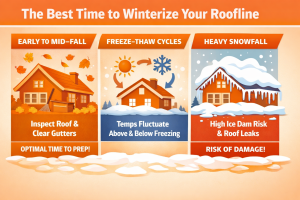
Timing has a measurable impact on preventing winter ice dams. The most effective preparation period in Ontario is early to mid-fall, before consistent freezing temperatures set in. Once outside temperatures begin fluctuating between thawing and freezing, ice dam formation risk increases dramatically. Research in cold-climate building performance shows that addressing insulation and ventilation before heavy snowfall can reduce winter roof leaks by more than 60%.
Ideally, roof inspections and maintenance occur after most leaves have fallen but before snow arrives. This ensures accumulated debris such as pine needles and organic matter are cleared from gutters and downspouts. Ensuring downspouts clear and verifying proper drainage pathways before winter weather intensifies protects both the roof and foundation from water intrusion.
As temperatures drop, preventive adjustments become more difficult and hazardous. Early preparation allows homeowners to evaluate attic insulation, confirm proper ventilation, and identify weak points in the roof deck without emergency pressure.
Professional Winter Roof & Gutter Services in Ontario
Ontario winters demand more than basic roof maintenance. Heavy snowfall, repeated freeze–thaw cycles, and fluctuating outside temperatures create conditions where small weaknesses quickly turn into structural problems. Effective winter preparation focuses on attic insulation performance, balanced roof ventilation, and ensuring gutters and downspouts allow proper drainage even when snow melts and refreezes along the roof edge.
Recent Canadian housing assessments show that homes with optimized insulation and proper ventilation reduce winter-related roof leaks by up to 60%. Evaluations typically examine:
- Attic insulation depth and compression
- Air leakage around attic hatches
- Vent intake and exhaust balance
- Gutter slope and structural stability
- Flashing integrity along roof transitions
Many homeowners wait until visible ice buildup appears, but proactive inspection significantly lowers the risk of costly repairs later in the season. Identifying weak points before snow accumulation intensifies protects both the roof structure and foundation.
For overall guidance and winter roofline preparation advice tailored to Ontario conditions, homeowners can contact D’Angelo & Sons for reliable insight and direction. We will help you understand your roof’s current condition and outline practical next steps to strengthen it before winter fully sets in.
FAQs:
1. What temperature causes ice dams to form in Ontario?
Ice dams typically form when outside temperatures remain below 0°C while attic heat causes uneven melting on the roof surface. When temperatures rise slightly during the day and drop again at night, melting snow refreezes along the roof edge, creating ice buildup.
2. Can ice dams damage asphalt shingles?
Yes, prolonged ice buildup can force water beneath asphalt shingles, weakening underlayment and the roof deck. Over time, repeated freeze–thaw cycles may loosen fasteners, shorten shingle lifespan, and increase the risk of interior water damage.
3. How can I prevent ice dams before winter starts in Ontario?
Prevention focuses on improving attic insulation, ensuring proper ventilation, and keeping gutters and downspouts clear. Addressing heat loss before heavy snowfall begins significantly reduces uneven melting and lowers the likelihood of winter ice dams forming.
4. Is ice dam removal covered by homeowners’ insurance?
Coverage depends on policy terms and maintenance history. In many cases, sudden interior water damage may be covered, but gradual neglect may not qualify. Reviewing your policy details in 2026 ensures you understand current winter-related claim conditions.
5. Do gutter guards stop ice dams?
Gutter guards help reduce accumulated debris and improve drainage, but they do not fully prevent ice dams. Ice formation is primarily driven by heat loss and ventilation imbalance rather than gutter blockage alone.
6. Should I use rock salt to remove ice dams?
Rock salt may create small melt channels temporarily, but improper use can damage shingles and metal components. It does not resolve underlying insulation or ventilation issues that contribute to recurring ice dam formation.
7. When is the safest time to remove excess snow from a roof?
The safest time is shortly after heavy snowfall, before thick ice layers develop. Using proper safety gear and removing snow carefully reduces roof stress, but underlying ventilation and insulation conditions must still be addressed.
Recent Posts
-

Top 10 Eavestrough Companies in Hamilton & Burlington 2026
-

Top 10 Roofing Companies in Hamilton & Burlington 2026 Ranking
-

Why Is Water Running Down My Siding? Causes & Solutions
Choosing a reliable roofing company in Toronto can be daunting, especially with the ever-increasing number of contractors promising excellent services. D’Angelo & Sons assessed various roofing contractors based on the quality of service, warranties, services offered, and other key factors to create a list of the top 10 roofing companies in 2026.
-
When Should You Replace Gutters? 10 Warning Signs Homeowners Shouldn't Ignore
Choosing a reliable roofing company in Toronto can be daunting, especially with the ever-increasing number of contractors promising excellent services. D’Angelo & Sons assessed various roofing contractors based on the quality of service, warranties, services offered, and other key factors to create a list of the top 10 roofing companies in 2026.
-

Why your soffits fascia matter and how to spot early damage
Choosing a reliable roofing company in Toronto can be daunting, especially with the ever-increasing number of contractors promising excellent services. D’Angelo & Sons assessed various roofing contractors based on the quality of service, warranties, services offered, and other key factors to create a list of the top 10 roofing companies in 2026.
-
The ultimate guide to cleaning and maintaining your gutters
Choosing a reliable roofing company in Toronto can be daunting, especially with the ever-increasing number of contractors promising excellent services. D’Angelo & Sons assessed various roofing contractors based on the quality of service, warranties, services offered, and other key factors to create a list of the top 10 roofing companies in 2026.


